The Arduino platform has been a game-changer in the embedded systems space, popularizing electronics for hobbyists, educators, and professional engineers alike. Its simplified IDE, vast community support, and straightforward hardware have made it the go-to for countless projects. Yet, as demands for processing power, connectivity, and specialized features grow, many find themselves searching for more tailored solutions. In this article, we’ll discuss various Arduino alternatives that may offer an advantage depending on the application.
Notable Features and Use Cases of Arduino Alternatives
| Board/Series | Notable Features (Over Arduino) | Key Use Cases / Why Choose This? |
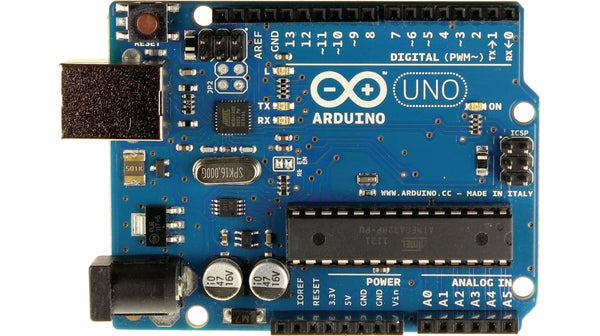
| Arduino Uno | Baseline: 8-bit ATmega328P, 16 MHz, 2 KB RAM, 32 KB Flash. Standard shield compatibility. | Ideal for beginners, simple control tasks, and rapid prototyping where basic I/O and moderate processing are sufficient. |
| Raspberry Pi Pico | Dual-core ARM Cortex-M0+ (up to 200 MHz), 264 KB RAM, 2 MB Flash. Programmable I/O (PIO) state machines. Pico W adds integrated Wi-Fi & BLE. | A good choice for projects requiring more processing power and memory than an 8-bit Arduino, especially for digital signal processing or fast, custom I/O timing. Pico W excels in cost-effective IoT applications. |
| ESP32 Series | Integrated Wi-Fi (2.4 GHz) & Bluetooth (BLE), dual-core 32-bit Xtensa/RISC-V (up to 240 MHz), more RAM/Flash, PSRAM support. | The go-to for IoT, home automation, and networked devices where robust wireless communication and substantial processing power are needed at a low cost. Excellent for cloud connectivity and web server applications. |
| Adafruit Feather | Modular ecosystem with diverse MCUs (e.g., SAMD, ESP32, RP2040, nRF52840). Thin, light form factor with built-in battery charging & connectors. | Perfect for portable, battery-powered projects, wearables, and modular IoT sensor platforms where size, power management, and customizable functionality (via FeatherWings) are critical. |
| Teensy 4.x | Extremely high-performance ARM Cortex-M7 (up to 600 MHz), large RAM (1 MB) and Flash (8 MB). Advanced USB capabilities (MIDI, HID, Audio). | Select for high-speed data processing, complex audio synthesis, demanding real-time control, and advanced USB device emulation where traditional Arduino’s speed is a bottleneck. |
| STM32 Nucleo | Wide range of powerful ARM Cortex-M microcontrollers (M0-M7) with diverse clock speeds (72-480+ MHz) and memory. Professional development ecosystem (STM32CubeMX/IDE). | Opt for industrial control, robotics, motor control, and professional embedded systems requiring scalability, deep hardware control, RTOS support, and a comprehensive development environment. |
| Seeeduino | Arduino compatibility with added Grove connectors for simplified sensor integration. Some models (e.g., XIAO ESP32C3) offer RISC-V with Wi-Fi & BLE in tiny form factors. | Ideal for those who need Arduino familiarity but want easier sensor hookups or require extremely compact, low-power wireless IoT nodes. |
| Micro:bit V2 | Educational focus with integrated LED matrix, touch sensors, accelerometer, Wi-Fi & BLE. ARM Cortex-M4 (64 MHz). Supports block-based and MicroPython programming. | Primarily for education, teaching introductory coding and electronics. Excellent for simple interactive projects that benefit from onboard sensors and displays. Not for industrial applications. |
| BeagleBone Boards | Single-board computers (SBCs) with ARM Cortex-A processors (1 GHz+) running Linux, with substantial RAM/storage. Programmable Real-time Unit (PRU) for bare-metal control. | Choose for embedded Linux applications, industrial automation, robotics, and edge computing needing a robust OS, significant processing power, and versatile I/O, often with real-time requirements. |
Why Consider Arduino Alternatives?
While Arduino boards excel in ease of use and a shallow learning curve, they do come with inherent limitations that can become bottlenecks for more ambitious projects. Grasping these constraints helps clarify why other platforms emerge as alternatives:
- Performance: Classic Arduino boards, often built around 8-bit ATmega microcontrollers, typically operate at modest clock speeds (e.g., 16 MHz). This performance ceiling can restrict data processing rates and the execution of complex algorithms, making them less suitable for computationally intensive tasks such as advanced digital signal processing or real-time control of multiple high-speed peripherals.
- Connectivity: Many standard Arduino boards lack built-in wireless capabilities, such as Wi-Fi or Bluetooth, necessitating the use of additional shields or modules. Integrating these add-ons increases complexity, physical footprint, and overall bill of materials (BOM) cost; therefore, obtaining an alternative with integrated wireless capabilities simplifies connectivity.
- Specialized Features: While Arduino boasts a broad ecosystem of shields, some applications demand tightly integrated, specialized hardware features, like advanced cryptography, high-resolution ADCs/DACs, or dedicated hardware accelerators for AI/ML.
Choosing the Right Microcontroller: Key Technical Factors
Selecting an alternative requires a systematic evaluation of your project’s technical needs. It’s not about finding a universally “better” board, but the right board for the job. Here are some critical factors to weigh:
- Processor Architecture & Speed: Consider the CPU’s core type (e.g., ARM Cortex-M0+, M4, M7, RISC-V, Xtensa, x86), clock speed (MHz), and the number of cores.
- Memory: Evaluate the available RAM (for volatile data storage and program execution) and Flash memory (for program storage). Projects with large datasets, complex codebases, or graphical interfaces will require substantial memory. EEPROM, though often smaller, is crucial for non-volatile data storage.
- Integrated Connectivity: For IoT and networked devices, built-in Wi-Fi, Bluetooth Low Energy (BLE), or Ethernet is an advantage.
- GPIO and Peripherals: The number and type of General-Purpose Input/Output (GPIO) pins, along with integrated peripherals like Analog-to-Digital Converters (ADCs), Digital-to-Analog Converters (DACs), Pulse Width Modulation (PWM) channels, and communication interfaces (I2C, SPI, UART), dictate how easily the board can interact with external sensors and actuators.
- Development Environment: While Arduino IDE compatibility is a plus for many, dedicated IDEs like STM32CubeIDE or platform-specific SDKs (such as ESP-IDF) often provide advanced debugging capabilities. These include hardware breakpoints and real-time memory inspection, along with integrated peripheral configuration tools and more granular control over compiler optimizations, making them ideal for professional use.
- Physical Form Factor and Pinout: The board’s dimensions, pin arrangement, and power requirements are critical for integration into enclosures or custom PCBs.
- Cost-Performance Ratio: Balance the board’s capabilities against its price.
A Closer Look at Arduino Alternatives
Many excellent Arduino alternatives are available, each carving out its niche. Let’s look at some of the most popular and technically compelling options.
Raspberry Pi Pico
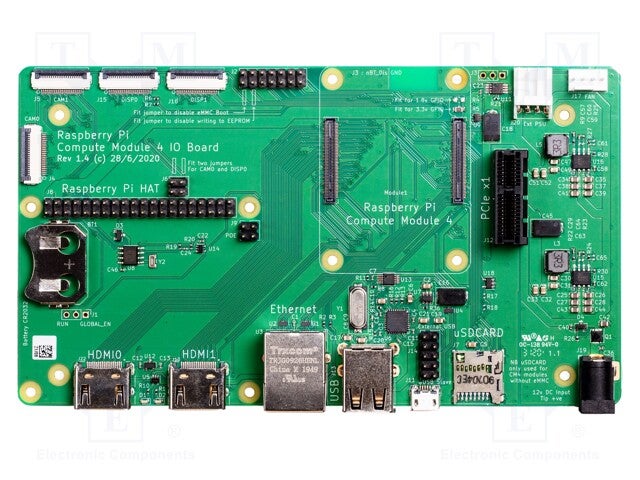
The Raspberry Pi Pico, powered by the in-house RP2040 microcontroller, is an affordable alternative.
- It features a dual-core ARM Cortex-M0+ processor, running up to 200 MHz.
- It has 264 KB of RAM and 2 MB of onboard Flash memory.
- The Pico W variant further enhances its appeal by adding integrated Wi-Fi and Bluetooth capabilities, making it a strong contender for cost-effective embedded projects and IoT applications.
- Programming can be done using MicroPython, CircuitPython, or C/C++ (including via the Arduino IDE), which provides flexibility for different skill levels.
Various Raspberry Pi components, such as the Raspberry Pi SC0915, are available on Ultra Librarian.
ESP32 Series (Espressif Systems)
For projects that require wireless communication, the ESP32 series from Espressif Systems is a go-to choice.
- These low-cost, energy-efficient microcontrollers integrate both Wi-Fi (2.4 GHz) and Bluetooth (BLE 4.2/5) capabilities.
- The chips typically feature dual-core (or single-core) 32-bit Xtensa LX6/LX7 or RISC-V microprocessors, with clock speeds up to 240 MHz for some Xtensa variants.
- They generally include 520 KiB of SRAM, and Flash memory can range from 4 MB to 16 MB or more, often accompanied by PSRAM (Pseudo-Static RAM).
- The ESP32 is a favorite for IoT, home automation, and networked sensor applications due to its power and integrated features.
- Programmed with the Arduino IDE, MicroPython, or Espressif’s own ESP-IDF, these boards offer a comprehensive development ecosystem.
Ultra Librarian provides extensive CAD models for popular ESP32 modules, like the ESP32-WROOM-32, simplifying PCB design and integration.
STM32 Nucleo Boards (STMicroelectronics)
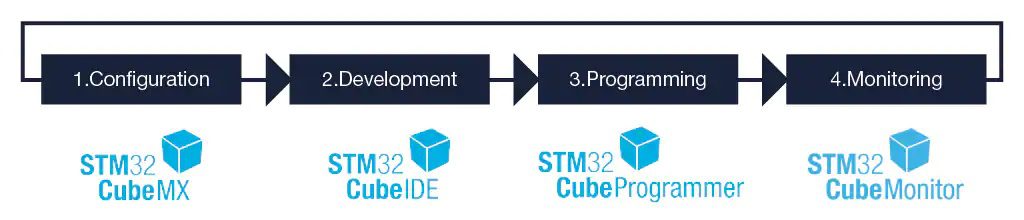
STM32Cube integrated tools to expedite smart board development and PCB operation
When a project demands professional-grade performance, scalability, and an extensive ecosystem, STM32 Nucleo boards from STMicroelectronics stand out.
- These boards leverage a wide array of ARM Cortex-M microcontrollers (ranging from power-efficient M0/M0+ to high-performance M7 cores), offering diverse clock speeds (often 72 MHz and higher) and memory configurations to suit almost any application.
- They are suitable for a wide range of uses, from industrial control to robotics and embedded systems.
- The STM32 ecosystem, anchored by tools such as STM32CubeMX for graphical configuration and STM32CubeIDE for development, provides engineers with precise control over both hardware and software.
Furthermore, Ultra Librarian offers an integration with STM32CubeMX, enabling users to customize pinouts and generate corresponding C code, significantly enhancing the design workflow for STM32-based projects.
BeagleBone Boards (BeagleBoard.org)
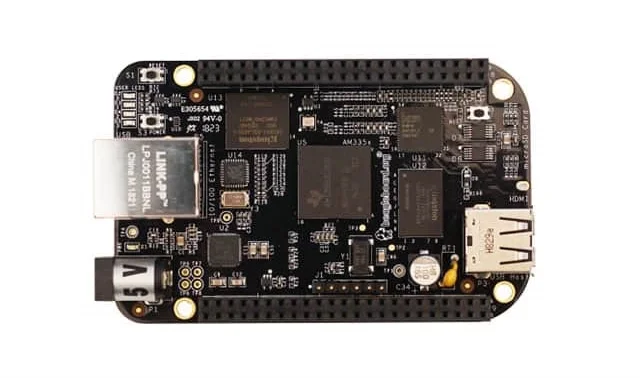
BeagleBone boards, such as the BeagleBone Black and BeagleBone AI, are open-source hardware SBCs that run Linux, offering a robust platform for more complex embedded Linux projects.
- The BeagleBone Black, for instance, features a 1 GHz ARM Cortex-A8 processor with 512 MB of DDR3 RAM.
- BeagleBone AI models incorporate even more powerful multi-core ARM Cortex-A processors, making them suitable for machine learning and edge AI applications.
- These boards provide extensive I/O capabilities, including a rich set of GPIOs.
- They are often chosen for industrial automation, robotics, and scenarios needing an embedded OS with substantial processing power.
You can find reference designs from BeagleBoard on Ultra Librarian.
Key Specifications of Arduino Alternatives
| Board/ Series | Microcontroller/CPU | Clock Speed (MHz) | RAM | Flash/ Storage | Connectivity |
| Arduino Uno | ATmega328P (8-bit AVR) | 16 | 2 KB | 32 KB | None |
| Raspberry Pi Pico | RP2040 (Dual-core ARM Cortex-M0+) | 200 | 264 KB | 2 MB | None (Pico W: Wi-Fi, BLE) |
| ESP32 Series | Xtensa LX6/LX7, RISC-V (Dual-core 32-bit) | 160-240 | 520 KB | 4-16 MB + PSRAM | Wi-Fi, Bluetooth/BLE |
| Adafruit Feather | Various (SAMD, ESP32, RP2040, nRF52840) | Varies | Varies | Varies | Varies (often Wi-Fi, BLE) |
| Teensy 4.x | ARM Cortex-M7 (32-bit) | 600 | 1 MB | 8 MB | USB (Device/Host), Ethernet (4.1) |
| STM32 Nucleo | ARM Cortex-M (32-bit) | 72 – 480+ | Varies | Varies | Varies |
| Seeeduino | ATmega328P, ESP32-C3 (32-bit RISC-V) | 16 – 160+ | 2 KB – 400KB | 32 KB – 4MB | None (XIAO ESP32C3: Wi-Fi, BLE) |
| Micro:bit V2 | ARM Cortex-M4 (32-bit) | 64 | 128 KB | 512 KB | Wi-Fi, Bluetooth/BLE |
| BeagleBone Black | ARM Cortex-A8 (32-bit) | 1000 | 512 MB | 4 GB eMMC (onboard) | Ethernet, USB |
For any engineer or designer exploring these Arduino alternatives, having access to accurate and verified CAD models is important. Ultra Librarian partners directly with major IC manufacturers, including Espressif Systems (ESP32), STMicroelectronics (STM32), Microchip (for AVRs in some Seeeduino boards), and BeagleBoard.org, ensuring high accuracy and adherence to industry standards like IPC-7351B for footprints and ISO 10303-21 for 3D models. As the world’s largest CAD library, Ultra Librarian provides free symbols, footprints, and 3D models in over 30 CAD formats.
Working with Ultra Librarian sets your team up for success, ensuring streamlined and error-free design, production, and sourcing. Register today for free.


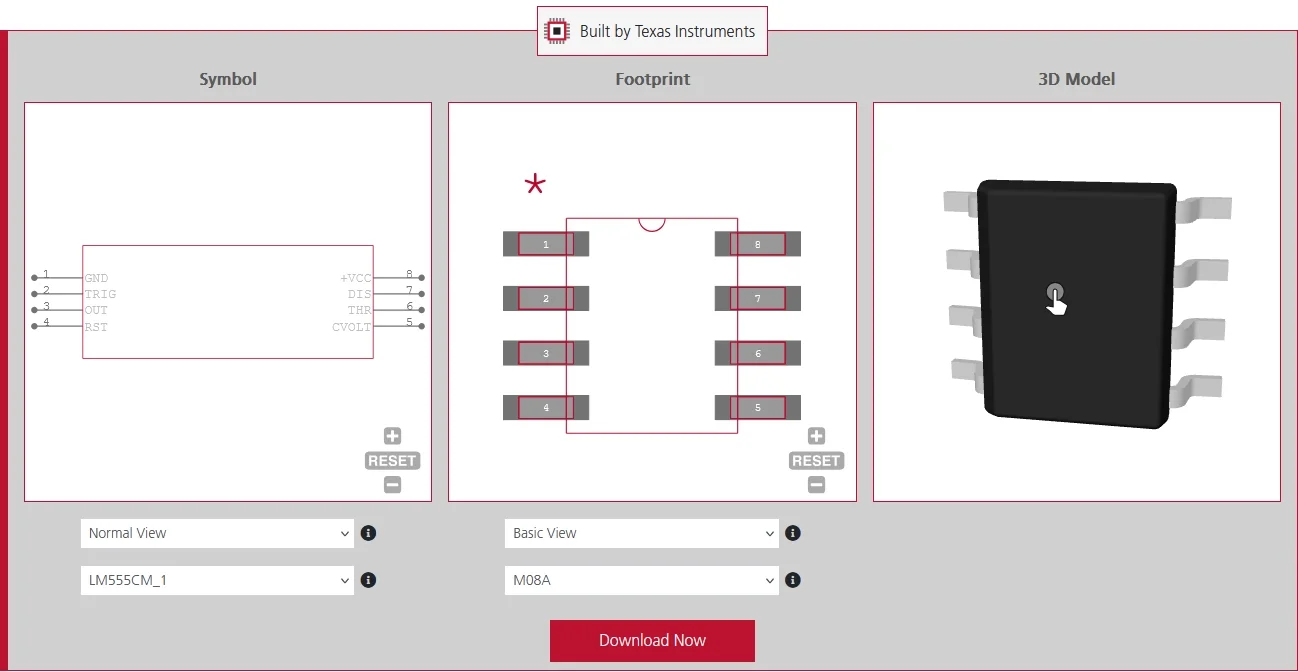
 If you’re looking for any of our component footprints or models, we have readily available and free options for you and your design team. Search our library for the solution you’ve been looking for.