Find alternatives to your many components with component cross reference searches
Imagine a scenario where a critical component for your flagship product suddenly goes out of stock, or worse, reaches its end of life. Without a readily available alternative, your production line could come to a halt, resulting in significant financial losses and reputational damage. Component cross reference searches are a defensive strategy against such disruptions, allowing designers to proactively identify and qualify replacement parts.
In this guide, you’ll learn:
- How to conduct systematic component cross reference searches
- Key parameters to evaluate when cross-referencing parts
- Best practices for proactive obsolescence management
- How modern tools streamline the cross-referencing process
How to Do Component Cross Reference Searches
A component cross reference search isn’t just about plugging a part number into a search bar. It involves a systematic approach, leveraging databases and parametric matching algorithms. The core idea is to establish a comprehensive profile of the original component and then compare it against potential alternatives:
- Requirements Gathering: Before any search begins, designers must have a crystal-clear understanding of the project’s functional needs. What electrical, mechanical, environmental, and regulatory constraints does the component operate under? This includes everything from maximum voltage and current loads to operating temperature ranges and specific package dimensions.
- Parametric Modeling: For the original part, a detailed parametric model is created. This model isolates key technical specifications that define the component’s behavior and physical attributes. These parameters are broadly categorized as shown in this table:
Key Parameters in Component Cross Reference Searches Parameter Category Description & Key Sub-Parameters Impact on Cross-Referencing Electrical Nominal values (R, C, L), voltage/current ratings, power dissipation, frequency characteristics, gain, bandwidth, noise figures, I/O impedance, timing (e.g., setup/hold times for ICs). Ensures functional equivalence and circuit performance. Mismatches can lead to instability or outright failure. Mechanical Package type (e.g., SOIC, QFN, BGA), dimensions, pin count, lead pitch, mounting method (SMD, through-hole), thermal pad requirements. Determines physical compatibility with the PCB footprint and enclosure. A must-have for automated assembly. Environmental Operating temperature range, storage temperature, humidity tolerance, vibration ratings, and ESD sensitivity. Verifies reliability under intended operating conditions. Impacts product lifespan and compliance. Regulatory RoHS compliance, REACH (SVHC) declarations, UL/CE certifications, and automotive (AEC-Q) qualifications. Ensures adherence to legal and industry-specific standards needed for market entry and product liability. Life Cycle Product status (active, NRND, EOL), lead time, and availability. Important for supply chain resilience and long-term production planning. - Database Query & Matching: Specialized search engines and component libraries, like Ultra Librarian, utilize these parametric models to query vast databases containing billions of electronic components. The goal is to find “candidate alternates” that match the original part’s profile.
Modern tools often distinguish between “static” and “dynamic” cross-referencing. Static lists are pre-compiled and can quickly become outdated. Dynamic platforms, however, generate candidate pools in real-time, factoring in new product introductions and obsolescence events.
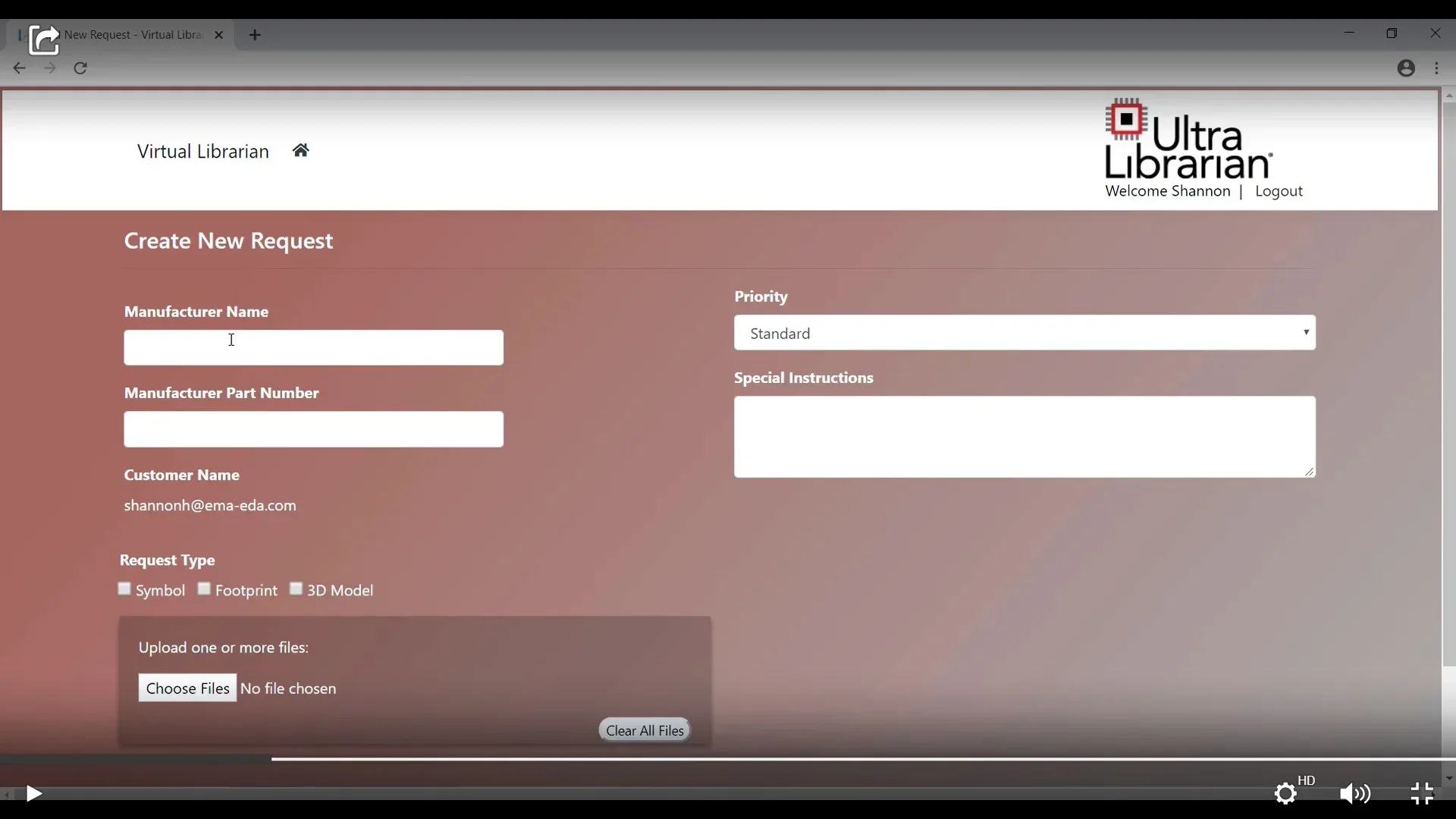
Ultra Librarian’s Virtual Librarian Service (VLS) interface for submitting component data
Understanding Compatibility: Form, Fit, and Function
When evaluating potential alternatives, one should consider the Form, Fit, and Function (FFF) of the component.
| Form, Fit, and Function | ||
| Criterion | Description | Key Considerations |
| Form | The visual parameters: shape, size, mass, weight, dimensions, and materials. | Does it physically fit on the PCB? Are there clearance issues? |
| Fit | The ability of the part to interact, interface, or connect to another part. | Does the pinout match? Is the mounting compatible (SMD pads, through-hole spacing)? |
| Function | The ability of the part to perform its intended function within the circuit. | Are the electrical specifications (voltage, current, timing) equivalent? Is performance identical under all operating conditions? |
Some advanced platforms even assign “drop-in grades” to cross referenced parts, indicating the level of design change required. For instance, an “A-grade” might signify an identical package and pinout with no parametric differences, while a “C-grade” could have minor parametric variations that necessitate further investigation. Next, we’ll look at some component cross reference searches’ best practices.
Best Practices for Effective Component Cross Reference Searches
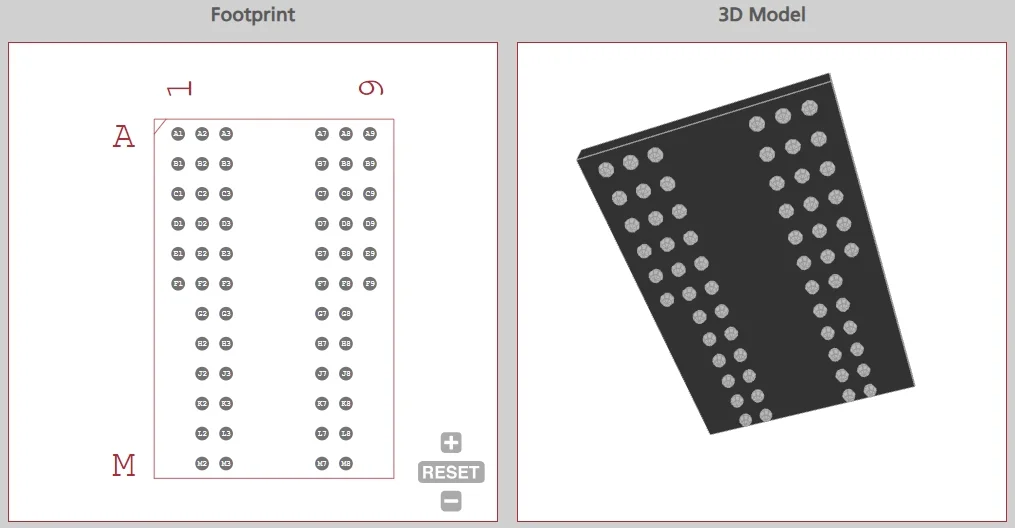
Parts like the Micron MT46V16M16CY-5B XIT:M may have specialized footprints, so check before swapping this module for a different component
To harness the full power of component cross reference searches and avoid potential pitfalls, adopt these best practices:
- Define Your “Intent” Clearly: Understand why you’re cross-referencing. Is it for production continuity (needs a drop-in), design flexibility (can tolerate functional equivalents), or obsolescence management (might need pin-to-pin or FFF)? Your intent dictates acceptable compatibility levels.
- Leverage Comprehensive Data Sources: Utilize platforms like Ultra Librarian that aggregate data from numerous manufacturers and distributors. These extensive libraries increase the likelihood of finding suitable alternatives.
- Thorough Datasheet Verification: Always compare the datasheets of the original and candidate parts side by side. Pay attention to all electrical, mechanical, and environmental parameters, even the seemingly minor ones.
- Prioritize Form, Fit, and Function (FFF): Ensure the alternative matches or closely approximates the original in terms of these three dimensions. For anything less than an exact match, carefully assess the impact on your PCB layout and circuit performance.
- Physical and Functional Validation: There’s no substitute for testing. Obtain samples of potential alternatives and test them within your actual circuit design, across the full operating range, to verify performance and compatibility.
- Cultivate Multi-Sourcing: For more critical components, identify and qualify at least two, preferably more, alternative sources. This significantly boosts your supply chain’s resilience.
- Proactive Management: Don’t wait for a crisis to strike. Regularly review your Bill of Materials (BOM) for parts nearing end-of-life or with limited availability, and proactively identify cross references.
With an effective cross-referencing strategy, you will also enjoy the following:
- Strengthened Supply Chain Resilience: Multi-sourcing components from various manufacturers reduces reliance on a single vendor, safeguarding against unexpected delays or material shortages.
- Cost Optimization: Discovering functionally equivalent parts from different suppliers can lead to more favorable pricing without compromising performance.
- Design Flexibility: Exploring alternative components might uncover parts with improved specifications, smaller footprints, or better power efficiency, potentially improving the overall design.
- Obsolescence Management: Identifying direct or functional replacements for parts nearing obsolescence helps extend product lifecycles and reduces the need for costly redesigns.
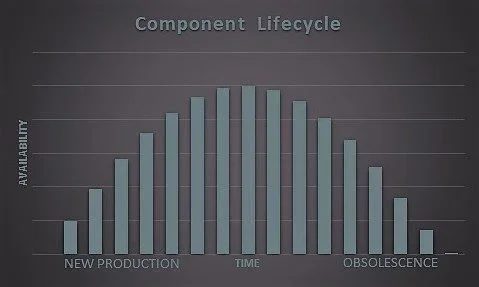
A typical electronic component lifecycle
To streamline your design process and keep production running smoothly, leveraging effective component cross reference searches is your answer. Ultra Librarian offers a vast database of verified component models, compatible with popular ECAD applications, helping you source alternatives from worldwide distributors quickly and accurately.
Working with Ultra Librarian sets your team up for success, ensuring streamlined and error-free design, production, and sourcing. Register today for free.


 If you’re looking for any of our component footprints or models, we have readily available and free options for you and your design team. Search our library for the solution you’ve been looking for.