
PCB Material Vendor Partnerships: Why They Matter

Printed circuit board (PCB) performance depends on more than layout geometry and component selection. Laminate, prepreg, and copper foil properties affect impedance, signal loss, thermal behavior, fabrication yield, and long-term reliability. Qualified PCB material vendor partnerships give fabricators a more controlled way to manage these materials, and they give original equipment manufacturers (OEMs) a way […]
PCB Design Review Checklist: A Quality Assurance Guide

Releasing a printed circuit board to manufacturing without a thorough quality assurance evaluation will lead to expensive fabrication re-spins. Hardware engineers must systematically verify the physical layout against the original electrical design requirements. Implementing a standardized PCB design review checklist catches schematic discrepancies, signal integrity violations, and fabrication errors before releasing files to the factory […]
Corporate PCB Design Standards for Enterprise Teams
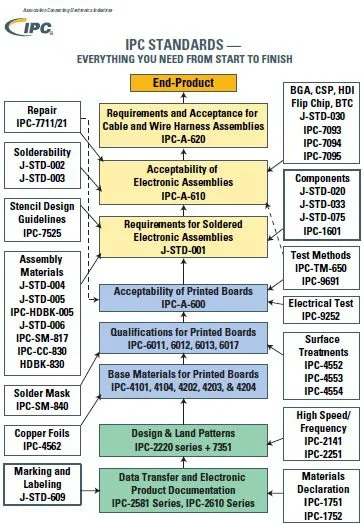
Engineering departments face immense pressure to release hardware quickly, which only grows as teams scale across multiple global sites. When electrical engineers work independently without a unified approach, individual design preferences creep into the process. These inconsistencies often surface only after fabrication, when mismatched conventions between engineers lead to manufacturing delays. Corporate PCB design standards […]
Component Lifecycle Management: Reduce Obsolescence Risk

An active and well-stocked component at the time of design can reach end-of-life status before the product it was designed into ever reaches full production volume. For Printed Circuit Board (PCB) designers working across multi-year development programs, component lifecycle management is the bridge between a finished schematic and a manufacturable product. Without such management, Bill […]
BOM Optimization Strategies: Maximizing Cost Efficiency in PCB Manufacturing

BOM Optimization Strategies can lead to reducing PCB costs. Managers often face pressure to cut printed circuit board (PCB) assembly costs. Making hardware means balancing technical goals against tight budgets. Consequently, careful Bill of Materials (BOM) management is highly valuable. BOM optimization strategies enable engineering teams to reduce costs without sacrificing product quality. Specifically, careful […]
FPGA Selection Guide: How to Choose the Right Device for Your Design

FPGA too big? too small? Too slow? Learn how to pick the right one from this FPGA selection guide before you lock in your design. What matters most: power, speed, or cost?
Alternative Component Sourcing for PCB: Obsolescence, Substitutions, and Best Practices

A PCB Alternative component sourcing guide covering obsolescence management, substitutions, and best practices for reliable supply chains.
The Power of Alternatives: How to Find Component Substitutes When Supply Chains Get Tight

Learn how to find component substitutes when supply chains get tight using TME parametric filters, and Ultra Librarian CAD validation.
Designing for Industry 4.0: Essential Components for Robust IoT Devices

Designing for Industry 4.0? Your Industrial IoT Component Selection device won’t live a cozy consumer life unless it is built for heat, vibration, EMI, and grime.
High-Speed PCB Design Guidelines

Following High-Speed PCB Design Guidelines can help you avoid costly respins In the early days of electronics, printed circuit board (PCB) layout was often treated as “connecting the dots.” As long as the copper connected pin A to pin B, the circuit worked. Today, that approach is a recipe for failure. With modern processors, memory, […]