
Building for the industrial environment requires more than standard parts
The transition to Industry 4.0 is transforming the factory floor from a collection of isolated machines into a synchronized, data-driven ecosystem. However, for the hardware engineers designing the nodes of this network, the “smart factory” presents a hostile environment in which their designs must operate. Unlike consumer electronics that live in climate-controlled environments, Industrial IoT (IIoT) devices must withstand extreme temperatures, constant vibration, electromagnetic interference (EMI), and corrosive environments.
In this context, a device is only as reliable as its weakest link. Successful industrial IoT component selection is not just about meeting functional specs; it is about ensuring survival. This guide explores the critical component categories required for robust IIoT design and how Transfer Multisort Elektronik (TME)’s extensive inventory supports these rigorous demands.
The Unique Demands of Industrial IoT Component Selection
Before selecting parts, engineers must quantify the environmental stress. A standard commercial microcontroller might fail within weeks if placed next to a high-voltage variable frequency drive (VFD) or a vibrating stamping press. Key considerations:
- Thermal Management: Components must often operate between -40°C and +85°C (Industrial) or up to +125°C (Automotive grade) without active cooling.
- Vibration and Shock: Connectors and solder joints must withstand constant mechanical oscillation.
- Data Integrity: With devices expected to run 24/7 for a decade, memory endurance and error correction are non-negotiable.
Predictive Maintenance (PdM) with Industrial Sensors
In Industry 4.0, sensors do more than just monitor status; they predict the future. Predictive Maintenance (PdM) relies on detecting minute changes in machine behavior, such as a specific frequency shift in a motor’s vibration signature.
A consumer-grade accelerometer often lacks the bandwidth and noise floor required to detect early bearing faults amidst the background noise of a factory. Industrial-grade MEMS sensors available from TME are specifically calibrated for these high-frequency applications, ensuring that the data fed into AI algorithms is accurate enough to justify costly maintenance decisions.
Power Integrity in a Noisy Environment
While sensors and memory are critical for data, the lifespan of an IIoT device is often dictated by its power supply unit (PSU). Industrial electrical grids are notoriously “dirty,” prone to voltage sags, surges, and high-frequency noise generated by heavy inductive loads. Robust IIoT power design requires a three-pronged approach:
- Isolation: Use DC-DC converters with high isolation voltage (e.g., 3kV) to protect low-voltage logic circuits from ground loops and high-voltage transients on the main rail.
- Circuit Protection: Standard fuses aren’t enough. Industrial designs require Transient Voltage Suppression (TVS) diodes and Polyfuses (PTCs) to handle ESD events and short circuits without requiring manual maintenance.
- Stable Regulation: Linear regulators often generate too much heat for sealed industrial enclosures. High-efficiency switching regulators are preferred, provided they have adequate EMI filtering to prevent switching noise from corrupting sensitive sensor readings.
Critical Component Categories for Industry 4.0
| Component Area | Role in IIoT Systems | Industrial Challenges | What to Look For |
| Robust Sensors | Front-line data collection (e.g., vibration, environment) | Mounted directly on motors/pumps; exposed to vibration, shock, oil mist, dust, EMI | MEMS accelerometers with high-g shock ratings for predictive maintenance; environmental sensors with integrated EMI shielding and IP-rated housings |
| Industrial-Grade Memory | Data logging and local storage | High write cycles; risk of data corruption during power loss; consumer-grade memory fails early | Industrial NAND/NOR Flash or storage cards using SLC or pseudo-SLC, with high write endurance (TBW), ECC, and power-loss protection |
| Secure Connectors | Physical data and power interfaces | Vibration loosening connectors; corrosion in harsh factory environments | M8/M12 circular connectors with threaded locking, O-ring seals, and IP67/IP68 ratings |
TME Product Spotlight
TME serves as a vital logistics partner for industrial engineers, stocking robust components that are ready for immediate deployment. Here are specific examples of Industrial IoT component selection options available now:
- Robust Connectivity: Harting M12 Circular Connectors. Known for their robustness, these connectors ensure reliable data and power transmission even in environments with heavy vibration and moisture.
- Industrial Memory: Apacer Industrial Memory Cards. Essential for local data logging, these cards feature wide operating temperature ranges (-40°C to +85°C) and fixed bills of materials (BOM) to ensure long-term compatibility and data integrity in harsh settings.
- Precision Sensing: Honeywell Pressure Sensors. Designed for heavy-duty applications, these sensors resist harsh media (fluids/gases) and provide high-accuracy analog or digital outputs for process control.
Designing for Industry 4.0 requires a “defense-in-depth” approach to component selection. Once you have identified the rugged parts you need on TME, the next step is implementation. Industrial IoT component selection requires special care for the unique physical footprints, such as large shielding tabs or non-standard mounting pins, that make manual footprint creation risky.
If you’re looking for CAD models for industrial IoT components, Ultra Librarian helps by compiling all your sourcing and CAD information in one place.
Working with Ultra Librarian sets your team up for success, ensuring streamlined and error-free design, production, and sourcing. Register today for free.

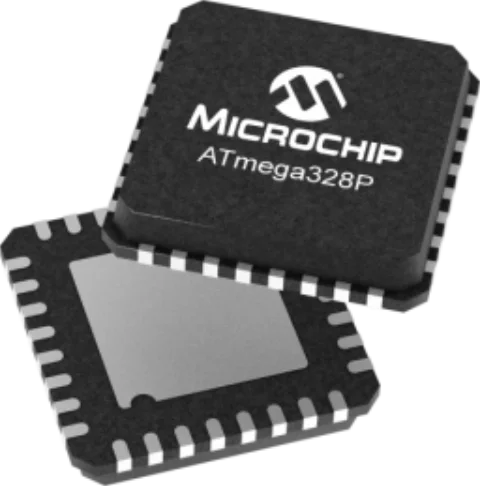

 If you’re looking for any of our component footprints or models, we have readily available and free options for you and your design team. Search our library for the solution you’ve been looking for.