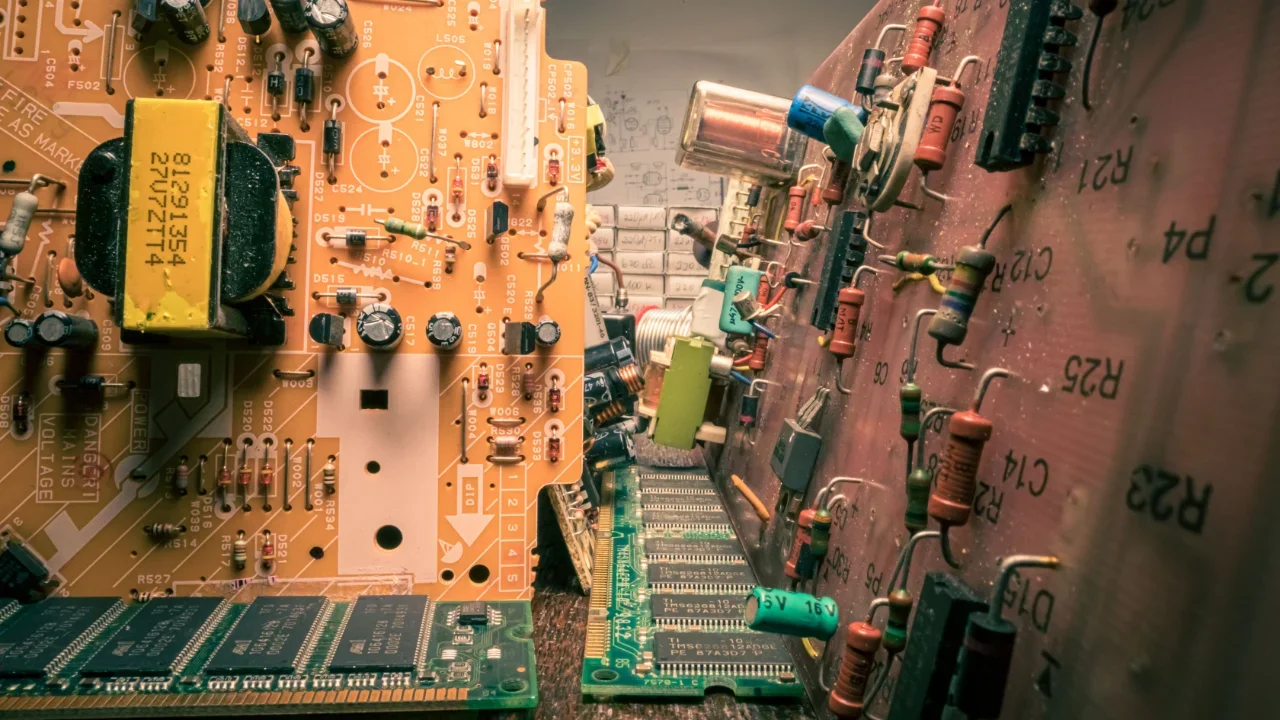
In the electronics industry, a design is only as viable as its supply chain. Even the most clever circuit is useless if a single 10-cent resistor has a 52-week lead time. Between rapid technological shifts and global supply volatility, alternative component sourcing has moved from a reactive “emergency” task to a core part of the engineering process.
Managing obsolescence and identifying suitable substitutions early prevents costly board re-spins and keeps production lines moving. This guide covers the best practices for selecting alternatives, managing your Approved Vendor List (AVL), and verifying that a substitute won’t compromise your design.
The Reality of Obsolescence and Supply Risk
Electronic components generally follow a lifecycle: Introduction, Growth, Maturity, Saturation, and Decline. Components that reach the end of this cycle are marked as End-of-Life (EOL) or Not Recommended for New Designs (NRFND).
Failing to monitor these statuses increases the risk of obsolescence. Beyond just availability, obsolescence risk includes the loss of technical support and the sudden spike in “Last Time Buy” (LTB) costs. If a part becomes unavailable after your board is in production, you face a “forced re-design.” To mitigate this, engineers must monitor Product Change Notices (PCNs), which alert users to changes in manufacturing location, materials, or upcoming discontinuation. Effective alternative component sourcing involves identifying these risks during the schematic phase, allowing you to qualify secondary parts before the first prototype is ever built.
Evaluating Substitutions: Form, Fit, and Function (FFF)
Not all substitutes are equal. Engineers categorize alternates based on how closely they match the original part. The industry standard for a perfect swap is “Form, Fit, and Function.”
- Form: The physical dimensions of the part. Does the alternate part use the same package (e.g., SOIC-8 or 0603)? Does it fit within the same physical height constraints?
- Fit: The electrical connection and pinout. Does Pin 1 on the alternate perform the same task as Pin 1 on the original? This includes pad layout compatibility, ensuring the land pattern doesn’t require a copper change.
- Function: The electrical specifications. Does the alternate meet or exceed the voltage, current, frequency, and temperature ratings of the original?
Levels of Component Substitution
| Substitution Type | Description | Risk Level | Validation Required |
| Drop-in Replacement | Identical footprint, pinout, and specs. Often from a direct competitor. | Low | Datasheet comparison. |
| Functional Equivalent | Performs the same task but may have slightly different specs (e.g., higher voltage rating). | Medium | Simulation and bench testing. |
| Pin-Compatible Alt | Fits the same pads but may have different internal logic or power requirements. | Medium | Circuit analysis & firmware update. |
| Package Variant | Same silicon but in a different package (e.g., swapping a QFN for a SOIC). | High | PCB Layout Change Required. |
Best Practices for Alternative Component Sourcing
A proactive sourcing strategy relies on a well-managed Approved Vendor List (AVL). Instead of listing a single Manufacturer Part Number (MPN) in your Bill of Materials (BOM), engineers should strive for at least two approved alternates in the AVL.
- Define Alternates in the Schematic: Add “Approved Alternates” as metadata directly into your CAD library. This allows procurement teams to switch parts without needing a new engineering sign-off.
- Verify Sourcing Integrity: Use tools that provide real-time stock and lifecycle data. If a part is NRFND, find an alternate immediately.
- Supplier Vetting: Only source from authorized distributors to ensure the “Chain of Custody.”
Avoiding Counterfeits in the Gray Market
When lead times get tight, the temptation to use “gray market” or unauthorized brokers increases. This is where most counterfeit parts enter the supply chain. Counterfeits often look identical to the original but fail under stress, exhibit high leakage, or lack the correct internal silicon. Always prioritize authorized alternative component sourcing to maintain board reliability.
Qualification Testing for New Alternates
Before moving a substitute into mass production, it must undergo qualification testing.
- Electrical Verification: Confirm the part performs under worst-case voltage and temperature conditions.
- Mechanical Fit: Use a 3D model to ensure the new part doesn’t interfere with the enclosure or nearby components.
- Solderability: Verify the footprint (land pattern) is compatible. Even “standard” packages like SOT-23 can vary slightly in pad dimensions across manufacturers.
FAQs
What is the difference between a direct cross and a functional cross?
A direct cross is a drop-in replacement that requires no changes to the PCB or software. A functional cross does the same job but might require minor circuit or layout adjustments.
How do I know if a part is obsolete?
Manufacturers issue Product Change Notices (PCN) or End-of-Life (EOL) notices. Professional component databases consolidate this data to show real-time lifecycle status.
Why is pin-mapping important for alternates?
Some manufacturers use the same package but different pinouts for similar parts. Always verify the “Fit” aspect of FFF before assuming a part is a valid substitute.
How Ultra Librarian Supports Alternative Sourcing
The most difficult part of switching to an alternative is ensuring the physical data is correct. If you find a functional equivalent but don’t have the CAD model, you have to spend hours creating it manually, which introduces human error.
Ultra Librarian simplifies alternative component sourcing by providing:
- Verified CAD Models: Download symbols, footprints, and 3D models for millions of parts, ensuring your alternate fits the board perfectly.
- Native Format Support: Export models directly into your specific ECAD tool, preserving the logic and layer definitions.
- Cross-Reference Visibility: Easily find and download models for competing parts to compare land patterns before you commit to a change.
Resilient design requires looking beyond the schematic. By mastering alternative component sourcing, you protect your products from the unpredictability of the global market. Start by multi-sourcing your BOM, vetting your suppliers, and always using verified CAD data to ensure your substitutes are production-ready.
If you are looking for verified CAD models for your approved alternates, Ultra Librarian helps by compiling all your sourcing and CAD information in one place. Our platform provides models that support all popular ECAD applications, along with sourcing information from worldwide distributors.
Working with Ultra Librarian sets your team up for success, ensuring streamlined and error-free design, production, and sourcing. Register today for free.

 If you’re looking for any of our component footprints or models, we have readily available and free options for you and your design team. Search our library for the solution you’ve been looking for.