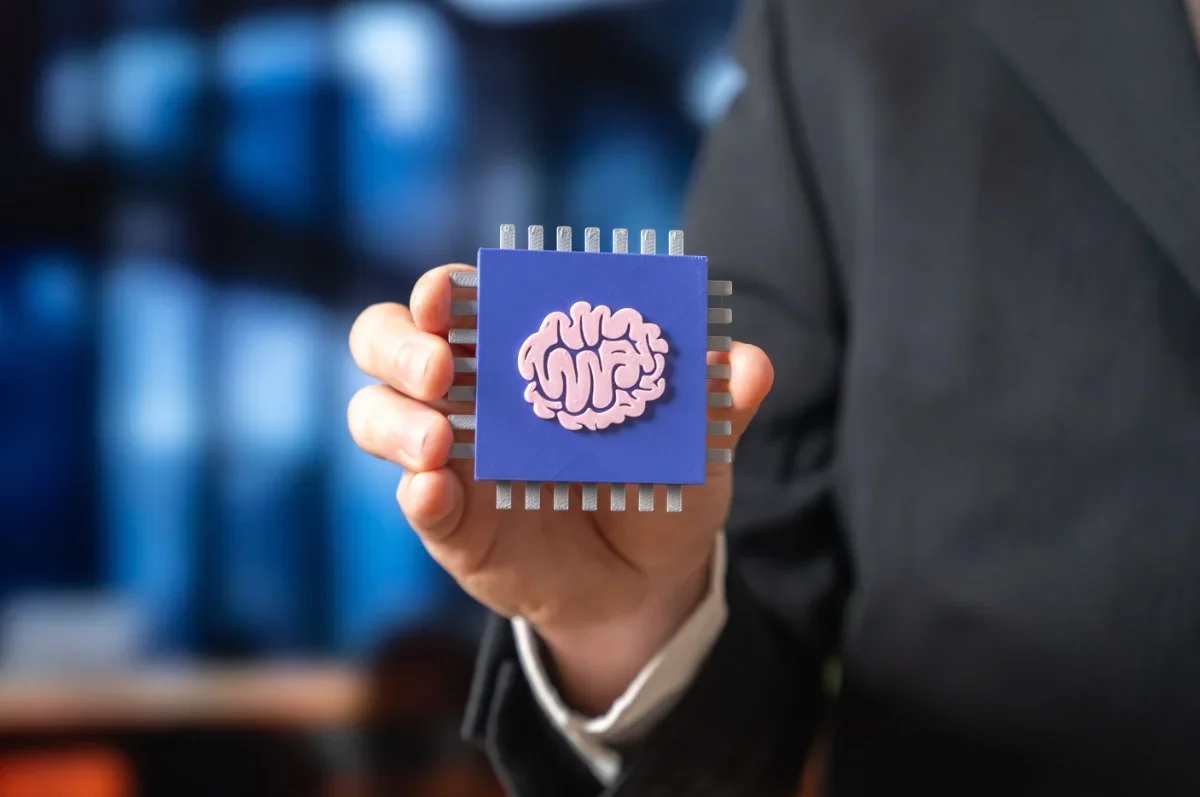
Selecting a microcontroller (MCU) is one of the first and most impactful decisions in any embedded project. The MCU you choose shapes the system design, power requirements, development complexity, and the features you can ultimately support. For 32-bit systems (in which data are processed in 32-bit-wide chunks), two of the most commonly considered options are the ESP32 and the STM32.
Although the ESP32 and the STM32 are widely used 32-bit microcontrollers, both are designed with very different priorities.
- The ESP32, developed by Espressif Systems, emphasizes low cost and high integration, with built-in Wi-Fi and Bluetooth that make it well-suited for IoT applications.
- The STM32 family from STMicroelectronics, based on ARM Cortex-M cores, is commonly used in industrial and commercial products where scalability, reliable performance, precise peripherals, and low power consumption are critical.
This ESP32 vs STM32 comparison piece breaks down their architectures, connectivity, power profiles, and development ecosystems to help you choose the best MCU for your next project.
ESP32 vs STM32 Comparison
When it was released, ESP32 disrupted the market by offering a highly integrated, low-cost System-on-Chip (SoC) with native Wi-Fi and Bluetooth. It has become the undisputed darling of the maker community and commercial IoT developers alike:
- Built-in Wi-Fi and Bluetooth; no extra modules needed
- Great for rapid prototyping and makers
- Cost-effective for connected, low-complexity devices
Conversely, the STM32 is a massive, highly scalable family of microcontrollers built on the industry-standard ARM Cortex-M architecture, prized by enterprise engineers:
- Extremely reliable and precise analog peripherals
- Excellent real-time performance and motor control support
- Ultra-low power options for industrial or battery-powered systems
ESP32 vs. STM32 Comparison
| Feature | ESP32 Family | STM32 Family |
| Use Case | Prioritize connectivity, rapid development, and integration of wireless features | Prioritize reliability, precision, and deterministic control |
| Target Application | Cloud-connected IoT, smart home, rapid prototyping | Industrial automation, battery-powered sensors, and hard real-time control |
| Architecture | Tensilica Xtensa (Dual/Single Core) & RISC-V | ARM Cortex-M Series (M0, M0+, M3, M4, M7, M33) |
| Typical Clock Speed | 160 MHz to 240 MHz | 16 MHz to 550+ MHz (highly variable by series) |
| Wireless Connectivity | Built-in Wi-Fi & Bluetooth (Classic/BLE) | Requires external modules (except specific WB/WL series for BLE/LoRa) |
| Wired Peripherals | Standard (I2C, SPI, UART, basic CAN/MAC) | Advanced (Multiple precise ADCs/DACs, CAN FD, Ethernet, USB) |
| Power Consumption | Moderate to High active power; good deep sleep | Class-leading ultra-low power (sub-microamp standby) |
| Primary Toolchains | ESP-IDF, Arduino IDE, MicroPython | STM32CubeIDE, Keil, IAR, Bare-metal C/C++ |
Architecture and Performance: Compute vs. Determinism
When comparing processing power, you must look beyond raw megahertz and examine how the underlying architectures handle workloads.
- The ESP32 Approach: Traditional ESP32 chips utilize a Tensilica Xtensa dual-core 32-bit architecture (with newer iterations like the C3 and S3 shifting to RISC-V).
- Running at up to 240 MHz, the ESP32 delivers massive raw compute power for its price.
- The dual-core setup is incredibly useful for IoT: one core handles the demanding Wi-Fi/Bluetooth networking stacks, while the other executes your application logic without interruption.
- The STM32 Approach: STM32 utilizes the ARM Cortex-M architecture. This gives designers immense scalability, from the ultra-cheap M0+ up to the powerhouse M7 with DSP (Digital Signal Processing) instructions and floating-point units.
- Where the STM32 truly shines is in deterministic, hard real-time performance. It handles interrupts and precise timing tasks with a level of reliability that the ESP32 struggles to match, making it the standard for motor control and industrial robotics.
Connectivity and Power Consumption
The deciding factor in an ESP32 vs STM32 comparison usually boils down to your project’s wireless requirements versus its power budget.
Wireless vs. Wired Dominance
The ESP32 is an out-of-the-box networking solution. Having Wi-Fi and Bluetooth physically integrated into the silicon (or pre-certified modules like the WROOM series) drastically simplifies PCB layout and reduces the Bill of Materials (BOM).
Historically, the STM32 has dominated wired industrial communication. It offers rich, built-in support for CAN bus, Ethernet MACs, USB-C, and multiple high-resolution ADCs/DACs. While ST offers wireless lines (like the STM32WB for BLE/Zigbee and the STM32WL for LoRaWAN), adding Wi-Fi to an STM32 design generally requires routing to an external transceiver IC.
The Power Budget Battle
If your device runs on a battery, the STM32 wins the ultra-low-power battle effortlessly. The STM32L and STM32U5 series are purpose-built for battery longevity, capable of drawing sub-microamp (< 1 µA) currents in deep sleep while retaining SRAM.
While the ESP32 features advanced power management, its active current draw is high (often spiking over 200mA when the Wi-Fi radio is transmitting). Its deep sleep modes are respectable (~10 to 100 µA), but it cannot match the extremely long-term battery efficiency of a dedicated low-power STM32.
Development Ecosystems: Prototyping vs. Enterprise
Your engineering team’s familiarity with software tools directly impacts time-to-market.
- ESP32 Ecosystem: Espressif provides the ESP-IDF, a powerful, FreeRTOS-based toolchain. However, its massive popularity stems from its compatibility with the Arduino IDE and MicroPython. This accessibility, backed by a massive open-source community, makes the ESP32 perfect for agile development and rapid prototyping.
- STM32 Ecosystem: STM32 targets professional, enterprise-level engineers. The ecosystem is anchored by STM32CubeIDE and STM32CubeMX (a graphical tool for configuring pinouts and generating initialization code). While the learning curve is steeper, it offers unparalleled control, enterprise-grade debugging (SWD/JTAG), and seamless integration with professional RTOS environments.
Making the Right Choice for Your Board
Which MCU should you choose? Here are standard recommendations based on the application:
Choose the ESP32 if you are building:
- Smart Home IoT: Smart plugs, Wi-Fi appliances, and hubs where wireless connectivity is mandatory, and the device has access to wall power.
- Rapid Prototypes: Proving a concept quickly to stakeholders using the vast Arduino library ecosystem.
Choose the STM32 if you are building:
- Remote Battery-Operated Sensors: Devices that must sit in the field for 5+ years on a single battery.
- Industrial and Automotive Systems: Applications requiring precise analog measurements, motor control, CAN bus, or strict safety standards.
- Hard Real-Time Applications: Flight controllers, medical devices, or high-speed automation.
In the ESP32 vs STM32 comparison, there is no wrong answer, only the right answer for your specific hardware constraints. The ESP32 is a networking powerhouse that democratized IoT, while the STM32 remains the gold standard for robust, low-power, and precise embedded engineering.
If you’re looking for CAD models for the STM32 family, ESP32 modules, or any other common components, Ultra Librarian helps by compiling all your sourcing and CAD information in one place. Our platform provides verified, ready-to-use footprints, schematic symbols, and 3D models that support all popular ECAD applications, along with sourcing information from worldwide distributors.
Working with Ultra Librarian sets your team up for success, ensuring streamlined and error-free design, production, and sourcing. Register today for free.

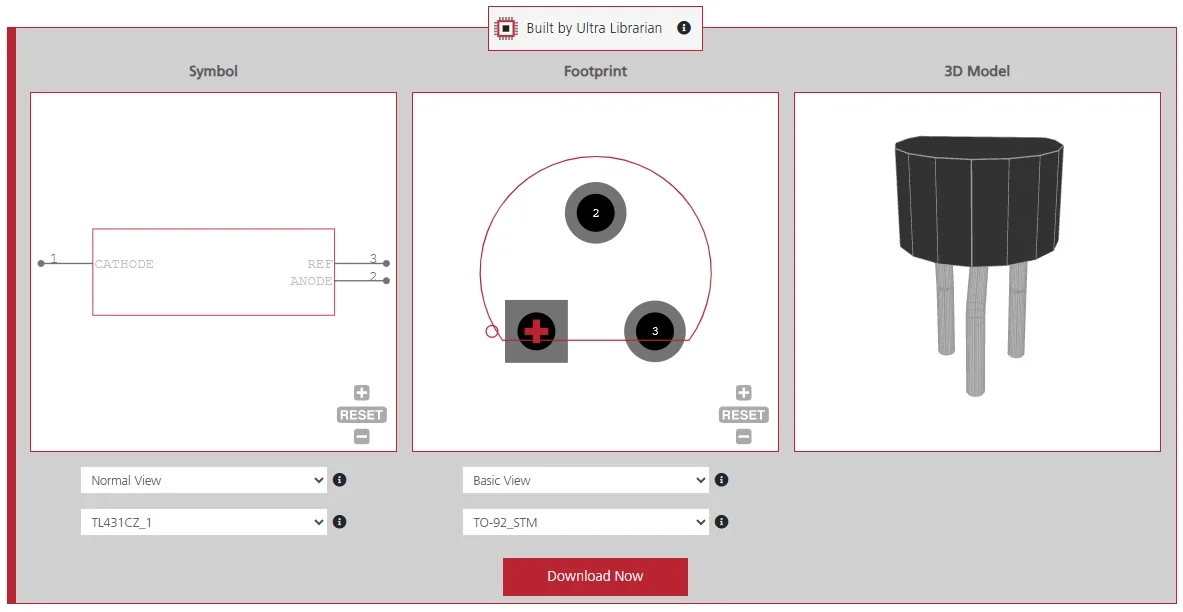
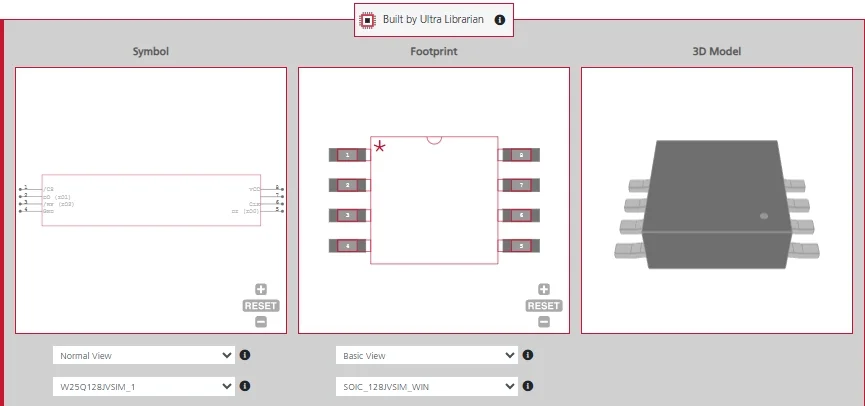
 If you’re looking for any of our component footprints or models, we have readily available and free options for you and your design team. Search our library for the solution you’ve been looking for.