Modern audio systems live and die by their timing. This applies whether they sit inside a car dashboard or rack up in a recording studio. Channel counts are growing fast. Networked audio is everywhere now. As a result, jitter budgets shrink rapidly.
Clocking is the precise rhythm that tells each converter and digital signal processor (DSP) exactly when to sample and process. This directly shapes audio fidelity: even tiny timing errors create subtle distortion and phase misalignment. Clocking is not a minor detail you can brush off; it is a strict design boundary.
Cirrus Logic’s newest family of precision timing chips
brings a massive update to their catalog. For hardware engineers, the Cirrus Logic CS2600 clocking for automotive and pro audio is more than just a quick spec bump. These ICs tackle direct issues with synchronization, jitter, and system-level setup.
New CS25xx/CS26xx Family vs. Previous CS2000-Series Timing Devices
| Feature / Capability | CS2000/2100/2200/2300 | CS2500/2501/2600 | Engineering Impact |
| Baseband Jitter | ~100 ps typical | < 21 ps | Cleaner clock leads to better audio performance |
| Glitchless Rate Switching | No | Glitchless transitions (CS2600 only) | Eliminates pops/clicks during rate changes |
| Automatic Rate Detection | Basic | Enhanced, multi-rate detection | Simplifies firmware, improves robustness |
| Phase Sync Loop | No | Yes (CS2600 only) | Enables phase-aligned distributed audio |
| Hardware-Only Mode | Partial | Expanded, MCU-free operation (CS2600 only) | Faster bring-up, no firmware dependencies |
| Pin Compatibility | — | CS2500 drop in for CS2000/CS2200 CS2501 drop in for CS2100/CS2300 | No PCB rework or firmware rework |
| Target Applications | Automotive, Pro-Audio, Audio Interfaces, Musical Instruments, Hi-performance audio playback | ||
| Production Timeline | Mature | Production |
Automotive Audio Clocking and Pro Audio Jitter: Why Precision Matters
Why do clocks matter so much right now? Automotive audio systems are now distributed, with multiple ECUs and amplifiers spread across the vehicle rather than a single central audio unit. It involves active road-noise cancellation, where microphones capture tire and wind noise, and the system injects an inverted signal through the speakers in real time. Multizone audio playback needs phase-coherent clocks spanning multiple electronic control units (ECUs).
Meanwhile, professional recording, mixing, and live-sound environments demand near-perfect timing. Audio over IP (AoIP) networks pass packets across Ethernet that arrive at different times. A local clock must reconstruct the original timing. Networks like Dante or AVB demand ultralow jitter for this exact reason. High-performance data converters need strict timing, too. Pro audio clocking jitter can ruin a mix, as Jitter introduces phase noise. Phase noise ruins the noise floor of a data converter. When the clock edge arrives too early or too late, the converter samples the wrong voltage. This causes harmonic distortion, degrading high-fidelity performance.
The CS2600 family targets these exact boundaries:
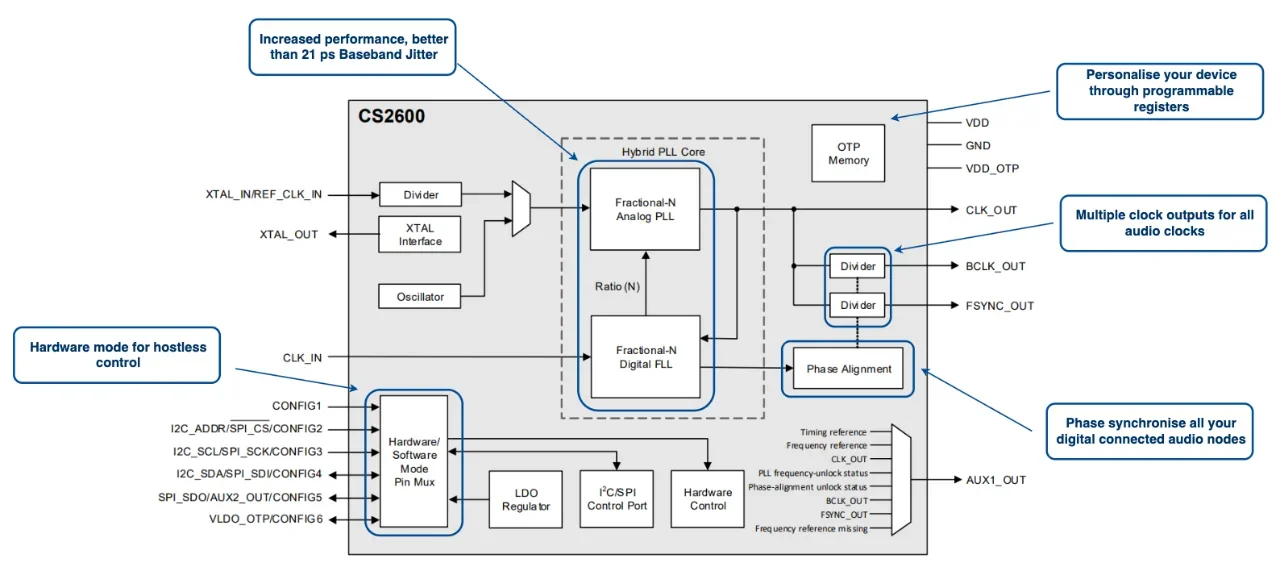
- < 21 ps baseband jitter: This ensures very clean data conversion.
- Glitchless clock transitions: Have you ever heard loud pops or clicks during sample rate changes? Switching sample rates on the fly usually drops the phase lock. The clock stops for a few milliseconds. That sudden drop triggers a transient spike, which can corrupt the DSP’s internal state, such as filter memory, delay lines, or phase accumulators, leading to audible artifacts or unstable behavior. Glitchless transitions stop that entirely. The clock continues to run smoothly while the internal phase-locked loop adjusts.
- Automatic rate detection: The hardware adapts to incoming variable-rate sources without breaking a sweat.
Advanced Fractional-N Synthesis For Unified Audio Clocking
Audio engineers constantly deal with two incompatible sample-rate families: 44.1 kHz–based rates and 48 kHz–based rates. Because they do not share an integer relationship, generating both cleanly from one reference clock has traditionally been difficult, requiring messy fractional math that added phase noise. To avoid this, designers simply placed two separate crystal oscillators on the board.
The CS2600 family eliminates this hardware redundancy. An advanced delta-sigma fractional-N phase-locked loop (PLL) generates pristine audio frequencies from a single, generic reference, even if that input is noisy or intermittent.
Handling this frequency division internally delivers clear design advantages:
- Eliminates dual-crystal layouts: Generating both sample rate families from one source slashes component count and shrinks the board footprint.
- Neutralizes phase noise: The hybrid PLL directly stops pro audio clocking jitter before it reaches sensitive data converters.
- Offloads the processor: The silicon keeps timing math perfectly clean without background help from the host microcontroller.
Drop-in Compatibility: A Practical Upgrade Path
Upgrading older boards can be a massive headache. For engineers supporting long-lifecycle designs, drop-in compatibility is likely the biggest draw. These chips are pin-compatible replacements for the legacy CS2000, CS2100, CS2200, and CS2300 series.
This practical upgrade path allows:
- Minimal printed circuit board (PCB) rework
- Direct reuse of existing firmware and register maps (where applicable)
- Straightforward bill of materials (BOM) consolidation
- A direct route to better audio without tearing up your verified clock tree
Automotive programs feature notoriously long qualification cycles, where a full redesign is expensive and carries risk. With pin compatibility, the accountants are happy, and the engineering team gets better specs at the exact same time.
The CS2600 Advantages
For designs where timing is central to overall system behavior, not just signal distribution, the CS2600 integrates automatic rate detection, hardware-only configuration, and a low-jitter PLL to reduce firmware dependency and external clocking components. This enables more predictable clock startup and rate adaptation in distributed, multi-domain audio systems.
Hardware Mode Enhancements: Simplifying Integration
Cirrus Logic also expanded the hardware-only mode. Designers can deploy these devices without a microcontroller (MCU) managing the setup logic. This expanded hardware operation is perfect for tight spaces and lowers software overhead.
Sometimes an MCU takes hundreds of milliseconds to boot, but the audio system needs a clock immediately. Hardware-only mode solves this scenario. The clock starts ticking the moment power is applied. Architectures where the MCU sleeps during the initial clock bring-up benefit heavily. Combined with automatic rate detection, the ICs adapt to incoming reference clocks on their own. Less firmware complexity means fewer timing-related boot failures.
Phase Sync Loop: Precision for Networked Audio
Networked audio requires tight tolerances on time. One standout feature here is the phase sync loop. It ensures multiple audio devices remain phase-coherent, even when spread across a wide network.
This capability is vital for:
- Multi-amplifier car audio systems
- Massive line arrays and live speaker rigs
- Spatial audio rendering setups
- Any environment where inter-channel phase error degrades the listening experience
Engineers can maintain strict timing relationships without leaning heavily on high-level network sync protocols. Automotive audio clocking gets a significant stability boost from this hardware-level phase-lock.
Application Scenarios
Let’s look at three concrete application areas.
1. Automotive Audio Gateways
Modern vehicles distribute audio processing across multiple electronic control units (ECUs) and amplifiers. The CS2600 family provides precise, ultralow-jitter clocks to sync these distributed nodes, maintaining phase alignment for applications like active road-noise cancellation and engine sound enhancement. By delivering glitchless, phase-coherent timing, the ICs reduce jitter-induced distortion in high-resolution digital-to-analog converters (DACs), ensuring clean, accurate audio throughout the cabin.
2. Professional Audio Interfaces
In studio and live-sound environments, the CS2600 family acts as a stable master clock for analog-to-digital (ADC) and DAC converters. Its glitchless sample-rate switching allows engineers to change rates on the fly without introducing pops or clicks. The devices also support AoIP systems, providing precise local clock reconstruction across Ethernet networks and ensuring strict timing alignment between multiple clock domains.
3. Embedded DSP Platforms
System-on-chip (SoC) designs often generate variable-rate clocks using internal phase-locked loops (PLLs), which can propagate jitter if not carefully managed. The CS2600 family provides precise, ultralow-jitter clocks to these platforms, simplifying board layout and reducing firmware complexity. With hardware-only operation and automatic rate detection, the ICs start cleanly at power-up and maintain accurate timing without microcontroller intervention, ensuring that PLL outputs remain stable and free from timing-induced distortion.
The Next Wave of Audio Clocking
The latest family of precision audio clock generators is far more than a minor performance bump. It adds system-level features that directly lower firmware complexity. Currently in full production and available for sampling, Cirrus Logic CS2600 clocking for automotive and pro audio ICs represents a complete rethink of how hardware should behave in dense setups. The mix of low jitter, predictable synchronization, and native backward compatibility makes these ICs highly compelling. They provide serious value for engineers designing the next generation of cars and studio gear.
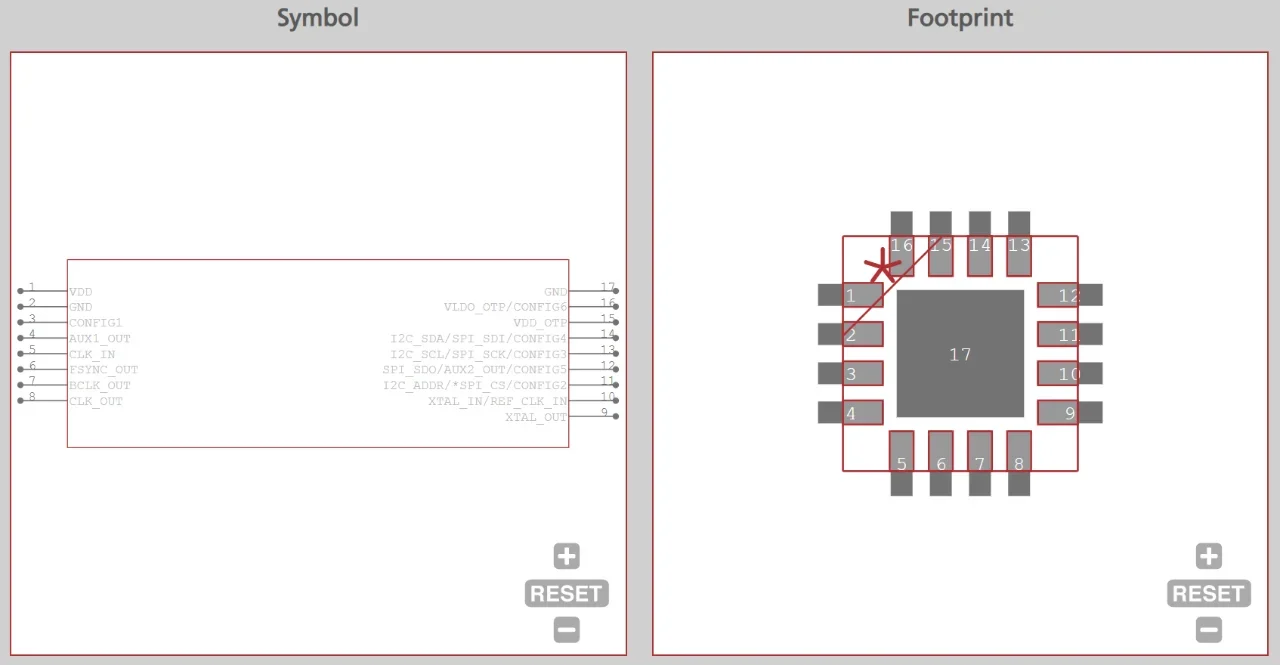
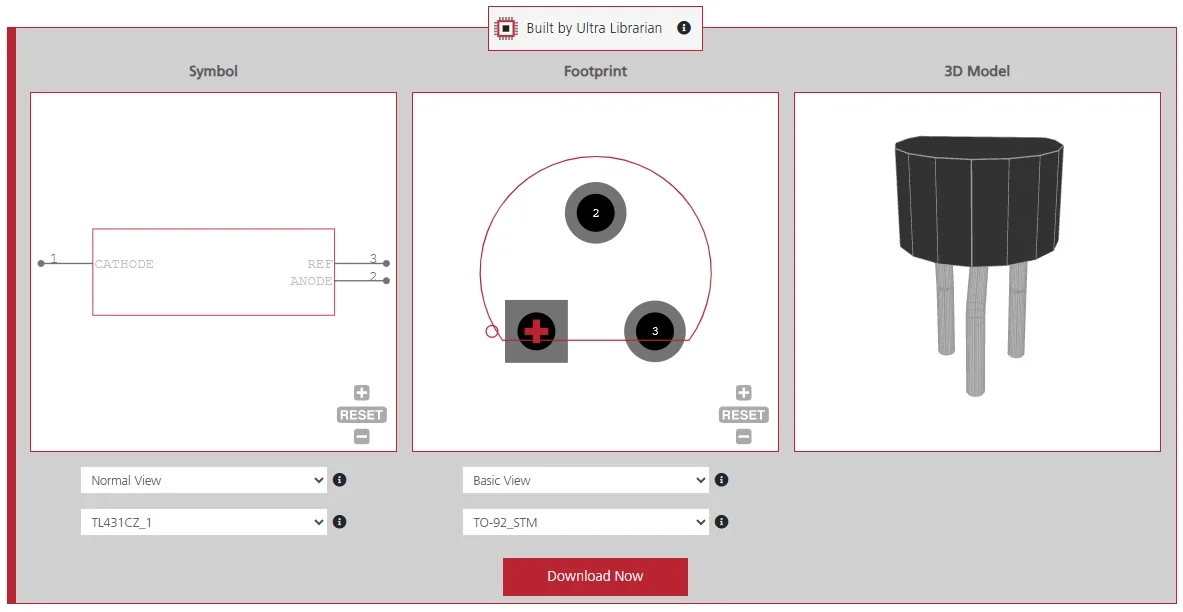
When you are ready to incorporate the CS2600 family into your next layout, Ultra Librarian provides verified symbols, footprints, and 3D models formatted for all popular ECAD applications. You can also quickly compare pricing and check current inventory across major worldwide distributors to keep your hardware builds strictly on schedule. For more information on Cirrus Logic’s devices for unmatched, transparent audio, visit https://www.cirrus.com/c/pro-audio-ulb200.
Working with Ultra Librarian sets your team up for success, ensuring streamlined and error-free design, production, and sourcing. Register today for free.

 If you’re looking for any of our component footprints or models, we have readily available and free options for you and your design team. Search our library for the solution you’ve been looking for.