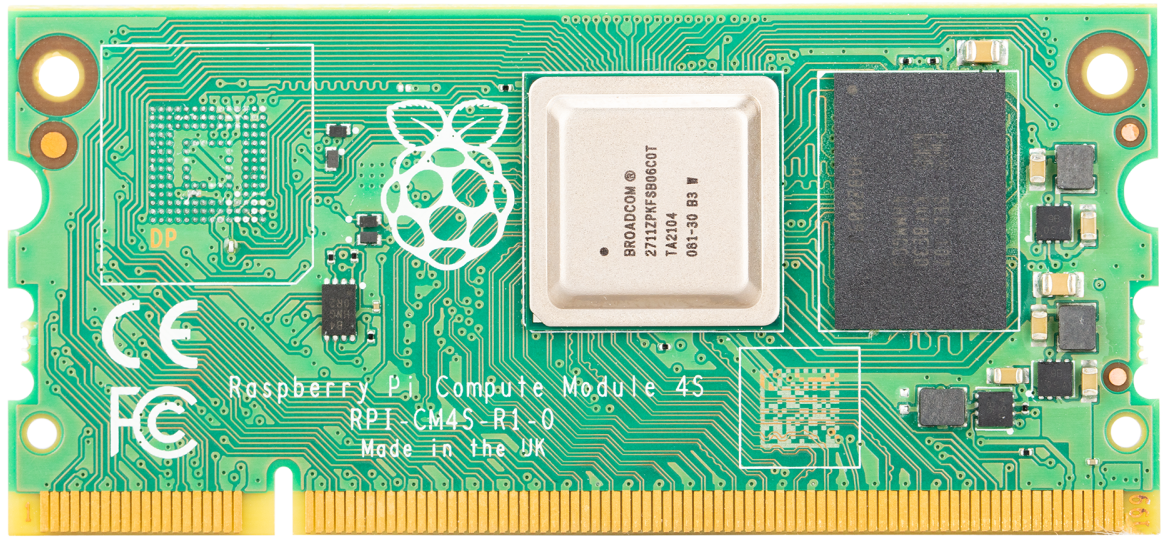
Raspberry Pi Compute Module 4S SC01762
The Raspberry Pi, a compact single-board computer, is used by hobbyists and professionals alike, finding its place anywhere from home automation to industrial control. Its true strength lies in its expandability through “HATs” – Hardware Attached on Top. These standardized peripheral boards connect directly to the Raspberry Pi’s 40-pin GPIO (General-Purpose Input/Output) header, enhancing its capabilities. A feature of a HAT is its integrated I2C EEPROM, which enables the Pi’s operating system to automatically identify the board and load the necessary drivers, streamlining the setup process.
Heading into 2026, updates to the Raspberry Pi lineup, led by the Pi 5’s PCIe interface, are opening new possibilities for HAT development. This article will explore some of the best Raspberry Pi HATs available, focusing on their technical specifications, functionalities, and typical applications. To make the recommendations practical, we include sample boards available through the major electronics distributor TME.
Best Raspberry PI Hats: 2026
Top view of the Raspberry Pi Computer Module module 4S SC01762)
The Raspberry Pi, a compact single-board computer, is used by hobbyists and professionals alike, finding its place anywhere from home automation to industrial control. Its true strength lies in its expandability through “HATs” – Hardware Attached on Top. These standardized peripheral boards connect directly to the Raspberry Pi’s 40-pin GPIO (General-Purpose Input/Output) header, enhancing its capabilities. A feature of a HAT is its integrated I2C EEPROM, which enables the Pi’s operating system to automatically identify the board and load the necessary drivers, streamlining the setup process.
Heading into 2026, updates to the Raspberry Pi lineup, led by the Pi 5’s PCIe interface, are opening new possibilities for HAT development. This article will explore some of the best Raspberry Pi HATs available, focusing on their technical specifications, functionalities, and typical applications. To make the recommendations practical, we include sample boards available through the major electronics distributor TME.
Overview of the Best Raspberry Pi HATs
Environmental Sensing and Internet of Things (IoT) HATs
The Raspberry Pi is a popular platform for Internet of Things (IoT) projects, and sensor HATs connect it to the physical world. Many hobbyists consider a sensor HAT the best Raspberry Pi HAT, especially for beginners.
Raspberry Pi Sense HAT
The Raspberry Pi Sense HAT is an integrated multi-sensor board. Its features include:
- Multiple integrated sensors:
- Accelerometer
- Gyroscope
- Magnetometer
- Temperature sensor
- Humidity sensor
- Barometric pressure sensor
- 8×8 RGB LED matrix: For visual output and data display.
- 5-way joystick: For user input and interaction.
- Comprehensive Python library: Simplifies programming and data acquisition.
- Educational focus: Widely used in STEM education and for projects like Astro Pi.
Specialized IoT Connectivity
Some HATs are built for specific IoT protocols, using chips optimized for wireless communication.
Examples of specialized IoT HAT functionalities:
- Multi-protocol wireless MCUs: HATs like the ZigStar ZigiHAT PoE integrate chips such as the Texas Instruments (TI) CC2652P, which support Zigbee, Thread, and Bluetooth Low Energy.
- Low-power communication: Ideal for battery-operated sensor nodes or energy-efficient IoT gateways.
- Mesh networks
- Integrated RTC (Real-Time Clock): Often included for accurate timekeeping without external network synchronization.
- Home automation hubs: Provide the communication backbone for smart home ecosystems.
Some HATs are for specialized applications, such as AI HATs. The Raspberry Pi AI HAT+ is designed for AI workloads, and often includes:
Common use cases include security systems, autonomous robotics, industrial inspection, and various embedded AI solutions. |
Power and Storage Expansion HATs
Reliable power delivery and high-speed storage are essential for Raspberry Pi deployments in diverse applications.
Power over Ethernet (PoE) HATs
PoE HATs supply both power and data through a single Ethernet cable, following IEEE 802.3af/at standards. They use onboard switch-mode converters to step down Ethernet voltage (typically 48V) to the Pi’s 5V rail (up to 5A on Pi 5 models).
Key characteristics and benefits of PoE HATs include:
- Single-cable solution: Delivers both power and data via Ethernet.
- IEEE 802.3af/at compliance: Ensures compatibility with standard PoE injectors and switches.
- Integrated power conversion & cooling: Steps down 48V Ethernet power to 5V.
- Remote flexibility: Ideal for IoT gateways, cameras, and sensors where outlets are limited.
Uninterruptible Power Supply (UPS) HATs
For applications that require power continuity, UPS HATs provide a safeguard through rechargeable batteries, along with associated power management circuitry. In the event of main power loss, the HAT transitions to battery power, preventing system interruptions.
Features of a UPS HAT often include:
- Battery backup: Utilizes rechargeable cells (e.g., 18650s) to provide continuous power during outages.
- Power switching: Automatically transitions between external power and battery power.
- Battery monitoring & shutdown: Tracks charge levels and safely powers down when capacity is low.
- Extended uptime: Ensures critical systems, such as data loggers, security systems, or remote servers, remain operational.
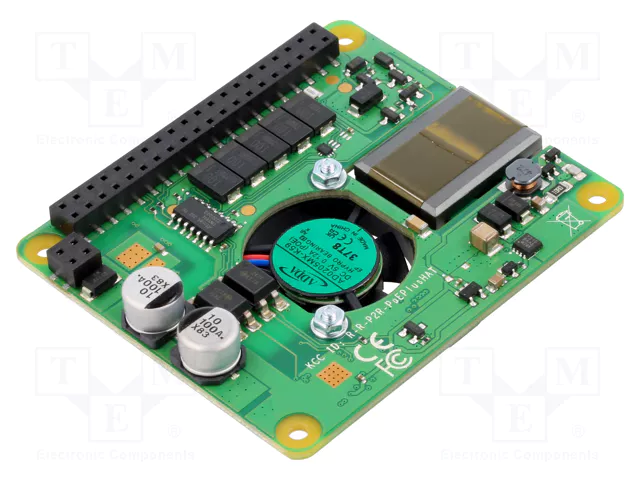
Raspberry Pi POE+ HAT
NVMe/PCIe Storage HATs
The Raspberry Pi 5’s PCIe 2.0 x1 interface supports NVMe (Non-Volatile Memory Express) Solid-State Drive (SSD) expansion through dedicated HATs, offering faster and more reliable storage than microSD.
When considering NVMe HATs, keep these technical aspects in mind:
- M.2 SSD compatibility: Supports common M.2 form factors (e.g., 2230, 2242, 2280, depending on HAT).
- High throughout: PCIe Gen 2 x1 delivers up to ~500 MB/s, particularly noticeable for boot times, application loading, and data-intensive tasks.
- Thermal management: NVMe drives can generate substantial heat; look for HATs with good airflow or integrated cooling.
- Enhanced reliability: SSDs offer greater durability and longevity compared to microSD cards for continuous operation.
Visual and Auditory Interfaces: Display and Audio HATs
To facilitate user interaction and rich media experiences, display and audio HATs provide human-machine interface capabilities for Raspberry Pi projects.
These audio HATs are suitable for music players, voice control systems, and sound effects generation.
Motion Control and Robotics HATs
For projects that require precise movement, such as robotics or CNC systems, dedicated motor control HATs are used.
Motor driver HATs enable the Raspberry Pi to control various types of motors, overcoming the limitations of directly driving motors from the GPIO pins.
Typical capabilities include:
- DC motor control: Drives up to four DC motors with independent speed channels (e.g., Adafruit DC & Stepper Motor HAT).
- Stepper motor control: Supports unipolar/bipolar steppers with selectable micro-stepping modes.
- H-bridge drivers: Provide efficient current delivery (e.g., TB6612 for 1.2 A continuous, 3 A peak).
- PWM controllers: Use I²C-based driver chips for precise, CPU-independent control.
- Integrated robotics HATs: Combine motor control, I/O expansion, and power management (e.g., SunFounder Robot HAT).
For applications that require ultra-smooth, closed-loop motion, like CNCs or lab automation, some HATs integrate advanced ICs (e.g., Trinamic drivers). These handle real-time control, acceleration ramps, and precise positioning independently of the Pi, ensuring industrial-grade accuracy.
TME: One-Stop-Shop for the Best Raspberry Pi HATs
TME (Transfer Multisort Elektronik) offers a range of Raspberry Pi HAT expansion boards. TME’s catalog includes a selection of in-demand modules.
Their offerings span various critical categories, including AI acceleration, audio processing, power management, and connectivity. Notable examples from TME’s selection include:
- AI HAT+ (13 TOPS / 26 TOPS): Featuring Hailo-8L accelerators for machine learning tasks.
- M.2 HAT+: Provides compact storage expansion through the PCIe 2.0 interface for Raspberry Pi 5.
- PoE+ HAT (R2): Offers 25W PoE+ capability for networked power management.
- Build HAT: An educational and robotics-focused HAT with LEGO Technic compatibility.
- Sense HAT Rev.2: Equipped with a multi-sensor array and LED matrix for environmental sensing.
- DAC PRO: Features a PCM5242 chipset for 24-bit/192kHz high-fidelity audio.
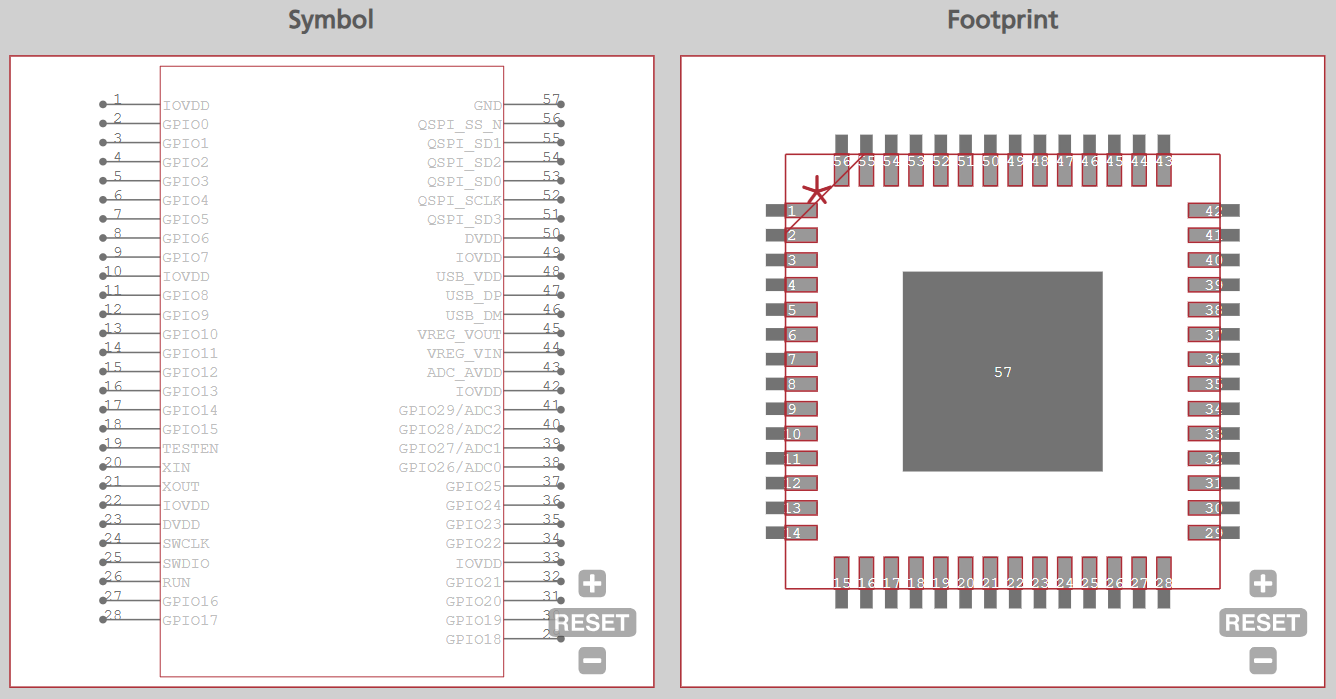
CAD data from Ultra Librarian of the Raspberry Pi RP2040 microcontroller chip
If you’re designing with the best Raspberry Pi HATs or any other complex electronic components, Ultra Librarian helps by compiling all your sourcing and CAD information in one place. We provide readily available CAD models for popular ECAD applications, streamlining your design process and connecting you with worldwide distributors.
Working with Ultra Librarian sets your team up for success, ensuring streamlined and error-free design, production, and sourcing. Register today for free.
The Raspberry Pi is a popular platform for Internet of Things (IoT) projects, and sensor HATs connect it to the physical world. Many hobbyists consider a sensor HAT the best Raspberry Pi HAT, especially for beginners.
Raspberry Pi Sense HAT
The Raspberry Pi Sense HAT is an integrated multi-sensor board. Its features include:
- Multiple integrated sensors:
- Accelerometer
- Gyroscope
- Magnetometer
- Temperature sensor
- Humidity sensor
- Barometric pressure sensor
- 8×8 RGB LED matrix: For visual output and data display.
- 5-way joystick: For user input and interaction.
- Comprehensive Python library: Simplifies programming and data acquisition.
- Educational focus: Widely used in STEM education and for projects like Astro Pi.
Specialized IoT Connectivity
Some HATs are built for specific IoT protocols, using chips optimized for wireless communication.
Examples of specialized IoT HAT functionalities:
- Multi-protocol wireless MCUs: HATs like the ZigStar ZigiHAT PoE integrate chips such as the Texas Instruments (TI) CC2652P, which support Zigbee, Thread, and Bluetooth Low Energy.
- Low-power communication: Ideal for battery-operated sensor nodes or energy-efficient IoT gateways.
- Mesh networks
- Integrated RTC (Real-Time Clock): Often included for accurate timekeeping without external network synchronization.
- Home automation hubs: Provide the communication backbone for smart home ecosystems.
Some HATs are for specialized applications, such as AI HATs. The Raspberry Pi AI HAT+ is designed for AI workloads, and often includes:
Common use cases include security systems, autonomous robotics, industrial inspection, and various embedded AI solutions. |
Power and Storage Expansion HATs
Reliable power delivery and high-speed storage are essential for Raspberry Pi deployments in diverse applications.
Power over Ethernet (PoE) HATs
PoE HATs supply both power and data through a single Ethernet cable, following IEEE 802.3af/at standards. They use onboard switch-mode converters to step down Ethernet voltage (typically 48V) to the Pi’s 5V rail (up to 5A on Pi 5 models).
Key characteristics and benefits of PoE HATs include:
- Single-cable solution: Delivers both power and data via Ethernet.
- IEEE 802.3af/at compliance: Ensures compatibility with standard PoE injectors and switches.
- Integrated power conversion & cooling: Steps down 48V Ethernet power to 5V.
- Remote flexibility: Ideal for IoT gateways, cameras, and sensors where outlets are limited.
Uninterruptible Power Supply (UPS) HATs
For applications that require power continuity, UPS HATs provide a safeguard through rechargeable batteries, along with associated power management circuitry. In the event of main power loss, the HAT transitions to battery power, preventing system interruptions.
Features of a UPS HAT often include:
- Battery backup: Utilizes rechargeable cells (e.g., 18650s) to provide continuous power during outages.
- Power switching: Automatically transitions between external power and battery power.
- Battery monitoring & shutdown: Tracks charge levels and safely powers down when capacity is low.
- Extended uptime: Ensures critical systems, such as data loggers, security systems, or remote servers, remain operational.
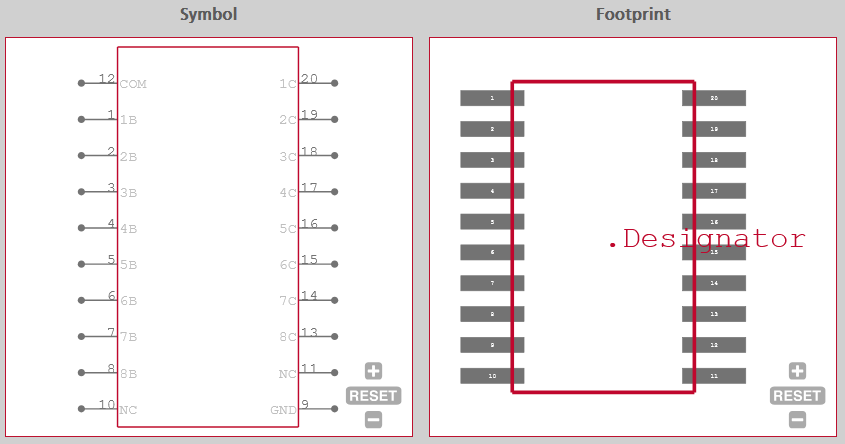
CAD data from Ultra Librarian of the Raspberry Pi RP2040 microcontroller chip
If you’re looking for more information on the ULN2803ADWR replacement or the ULN2803CDWR datasheet, Ultra Librarian helps by compiling all your sourcing and CAD information in one place. Our platform provides verified, ready-to-use footprints, symbols, and 3D models that support all popular ECAD applications, along with sourcing information from worldwide distributors.
Working with Ultra Librarian sets your team up for success, ensuring streamlined and error-free design, production, and sourcing. Register today for free.

 If you’re looking for any of our component footprints or models, we have readily available and free options for you and your design team. Search our library for the solution you’ve been looking for.